
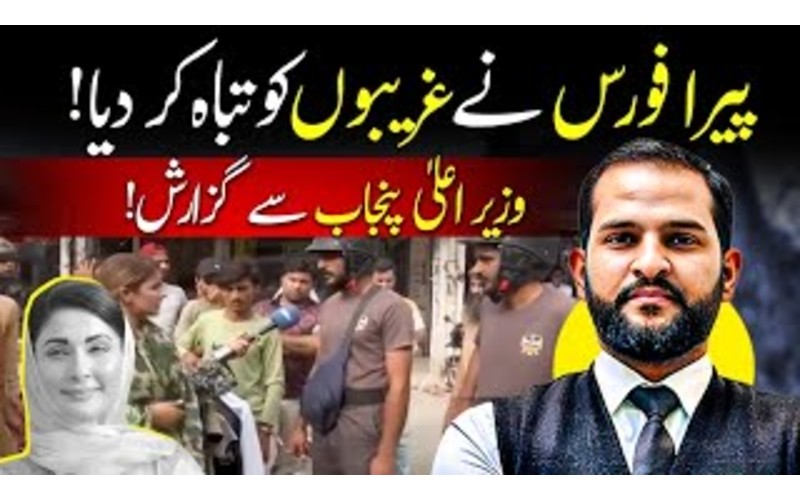
In a country already struggling with unemployment, inflation, and rising poverty, one would expect the law to protect those who are simply trying to survive. Unfortunately, recent actions against shoulder sellers tell a very different story.
Shoulder selling refers to individuals who carry small items on their shoulders or in their hands, belts, socks, undergarments, shirts, shoe polish, and sell them while walking. These are not shop owners. They do not occupy sidewalks with permanent structures. They do not build stalls, extend shop fronts, or block roads. They are among the poorest members of our society, earning daily wages just to feed their families.
Yet today, they are being treated like hardened criminals.
Videos circulating on social media show police handcuffing these sellers with shiny metal cuffs, dragging them away as if they were thieves, robbers, or murder suspects. Their small bundles of merchandise are seized. They are taken to police stations. They remain in custody until someone arranges bail. For many, even arranging bail is a struggle.
Let us be clear: this is not law enforcement. This is cruelty.
What the Law Actually Says
Under PEEDA Rules and Regulations 2024, enforcement is meant to target:
- Permanent encroachments on public land
- Shops extending their platforms onto roads
- Stairs, counters, or structures blocking sidewalks
- Carts or stalls permanently occupying public roads
These actions rightly fall under encroachment and public nuisance.
But shoulder sellers do not fall into these categories.
They do not create permanent obstructions.
They do not occupy public property.
They do not establish stalls or structures.
Legally speaking, they are neither encroachers nor a public nuisance.
Despite this, enforcement authorities, particularly in areas like Model Town, have attempted to classify shoulder sellers as public nuisances. Reports have even been submitted to courts claiming that these individuals disturb public order. Such reports are misleading, legally weak, and morally indefensible.
This misuse of authority violates the fundamental principle of equality before law.
Criminalizing Honest Survival
These people are not criminals.
They are not committing robberies.
They are not running online scams.
They are not stealing government land.
They are simply trying to earn halal income.
Most of them cannot afford shops. No one is offering them employment. They buy goods in the morning, sell them during the day, and whatever little profit remains feeds their children at night. Many support elderly parents. Some are the sole breadwinners of their families.
Ironically, begging on the streets often goes unchecked. But selling belts or socks becomes a crime.
What kind of justice system punishes work and tolerates begging?
Selective Accountability
If authorities truly want to eliminate encroachment, they should start with:
- Powerful commercial plazas occupying sidewalks
- Influential businesses blocking roads
- Illegal constructions on government land
- Large-scale land grabbers
Instead, enforcement focuses on the weakest targets, those who cannot fight back.
This is not governance. This is selective oppression.
Challenging Illegal Orders
Legal action has already been initiated against these unlawful practices. The reports labeling shoulder sellers as public nuisances are being challenged in court. These orders are illegal, void, and unconstitutional.
The matter will not stop there.
This issue is also being brought to the attention of the Chief Minister, with a simple request: please guide your enforcement forces to target real encroachers, not hungry fathers selling socks on sidewalks.
Your “anti-encroachment” drive should protect public spaces, not destroy poor families.
A Final Question
Is earning an honest living now a crime?
Is poverty being punished because it is easier than confronting powerful violators?
These shoulder sellers are not asking for charity. They are asking for dignity.
If we cannot protect our poorest citizens, then we must seriously question what kind of society we are becoming.
Let the law serve justice, not convenience.