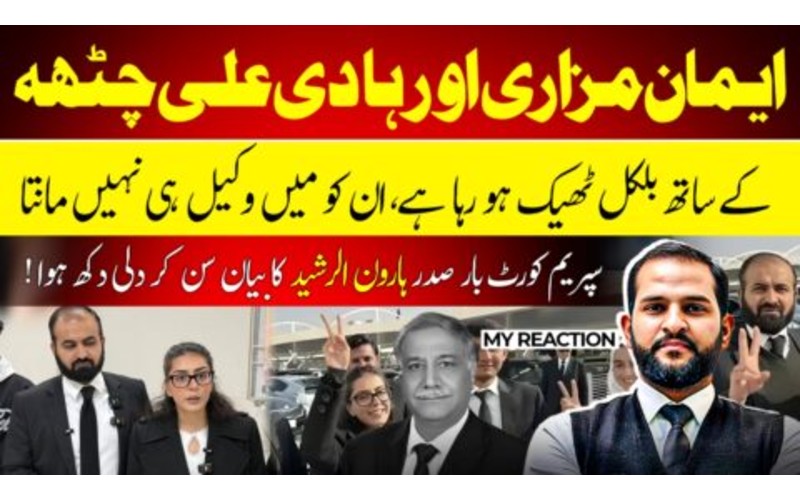
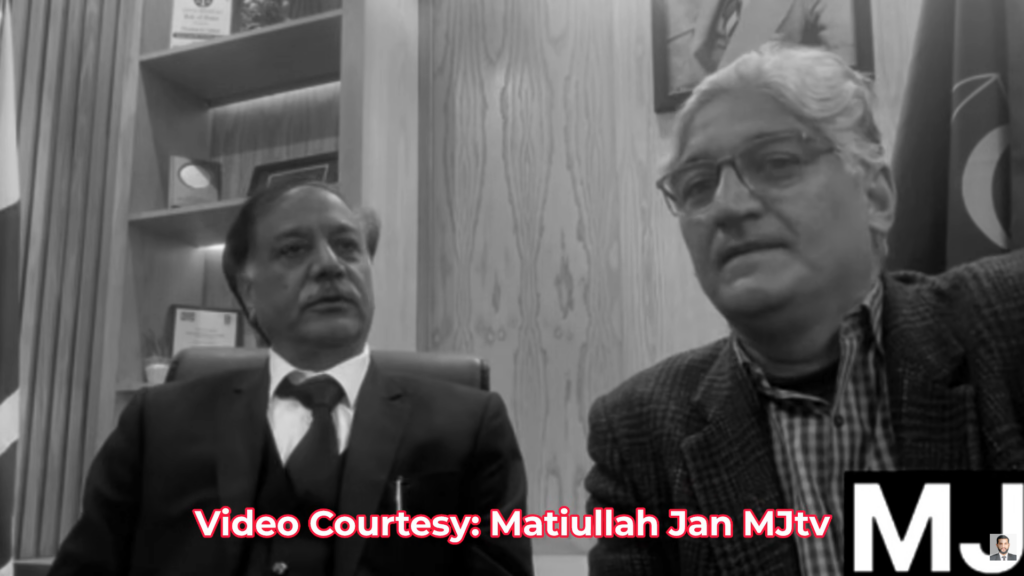
In recent days, a deeply troubling statement has circulated on social media: the President of the Supreme Court Bar Association reportedly declared that he does not consider Eman Mazari and Hadi Ali Chattha to be “real lawyers,” and that whatever punishment they received was “deserved.”
This statement should alarm every citizen who believes in justice, rule of law, and freedom of expression.
Let us be clear: Eman Mazari and Hadi Ali Chattha are lawyers. More importantly, they are lawyers who chose to stand with the oppressed. They raised their voices for people whose cases others refused to touch. They reminded institutions of their constitutional limits. They challenged injustice when silence would have been easier.
If that disqualifies someone from being called a lawyer, then we must seriously ask ourselves: what does being a lawyer even mean anymore?
When asked what crime these two committed, the same voices could not clearly explain. No specific charges. No concrete wrongdoing. Only vague claims about their “behavior.”
So what was their real fault?
Their fault was speaking truth to power.
Their fault was becoming a wall of resistance against lies.
Their fault was standing firm when many preferred compromise.
In any healthy democracy, this is called courage.
Yet here, it is being labeled misconduct.
The President of the Supreme Court Bar Association is not just another commentator. He represents the legal community of Pakistan. His words carry weight. When he publicly delegitimizes fellow lawyers without evidence, he doesn’t just harm two individuals, he undermines the entire profession.
Thousands of lawyers voted for him. Did they vote for someone who would declare colleagues “not lawyers” simply because they challenge authority? Did they authorize him to justify punishment without due process?
This moment demands reflection.
Lawyers are meant to protect constitutional rights, not echo state narratives. They are meant to defend the vulnerable, not shame those who do. They are meant to stand for justice, even when it is uncomfortable.
Eman Mazari and Hadi Ali Chattha represent that tradition.
I respectfully urge the leadership of the legal community to reconsider such statements and retract them. Words spoken from positions of power leave scars. They also set precedents.
And precedents matter.
May we remember that history does not honor those who stayed silent, it honors those who stood upright.