
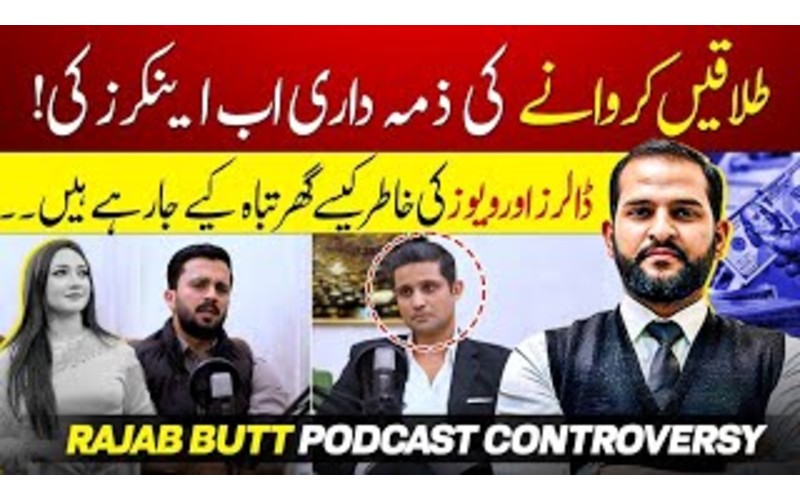
There was a time when it was believed that Satan created disputes and divorce between husband and wife. Then another era came when some religious figures would declare divorce over trivial matters, saying things like, “You prayed behind so-and-so, your divorce has occurred,” or “Your wife is no longer lawful for you.”
After that, a new phase began where family members and relatives started influencing divorces. Sometimes people were even encouraged to seek divorce over minor issues. Eventually, laws regarding divorce and khula were introduced. During that time, if a woman had a problem, she would approach a lawyer, and if a man wanted separation, he would also go to a lawyer for legal advice.
But today, it seems that a new group has taken over this responsibility, social media anchors and content creators.
The Role of Social Media in Marital Conflicts
We are currently in the blessed month of Ramadan, a time when it is said that Satan is chained. Yet, unfortunately, some anchor persons and content creators appear to have taken on the role of spreading conflict themselves. In pursuit of views, sensational content, and online engagement, they sometimes turn private marital matters into public drama.
Recently, a situation went viral where Dr. Nabiha appeared on a show, and clips from that appearance spread rapidly across social media. Statements like “I won’t leave you,” and accusations about humiliation and disrespect began circulating online. Thumbnails were created using provocative titles and images to attract attention.
Dr. Nabiha reportedly claimed that Haris Khokhar had expelled her from the house, which further intensified the controversy.

The Problem with Misleading Clips
The issue became more serious when a podcast was uploaded. From a two-hour podcast, only two lines were taken out of context and used as the thumbnail with the caption: “From my side, this marriage is over.”
However, anyone who listens to the entire podcast will realize that Rajab Butt never actually declared that his marriage was over. He simply said phrases like “I am done with this marriage” within a broader conversation where he was describing the stress and difficulties he was experiencing in his marital life.
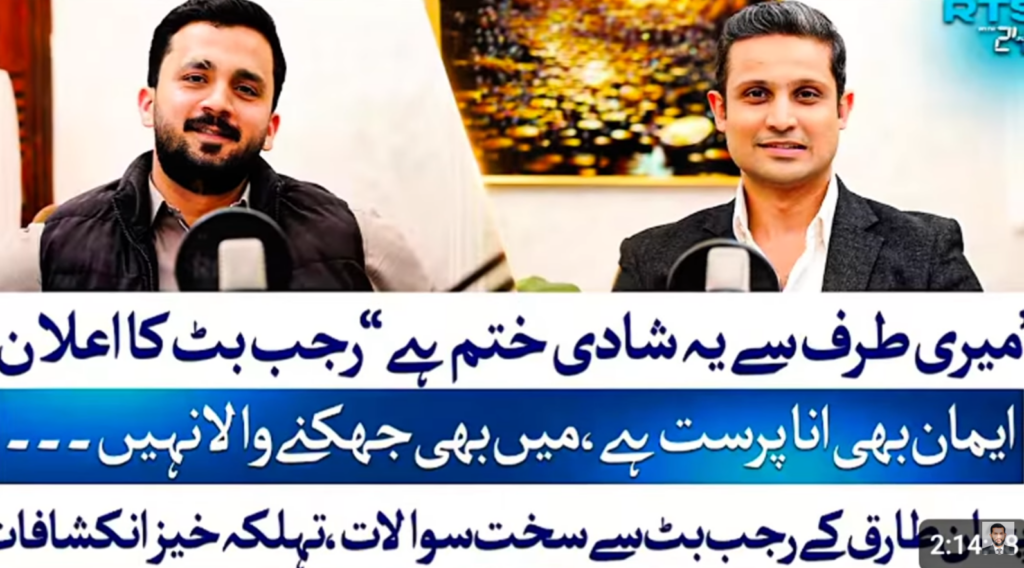
In normal conversation, saying “I’m done with this” often means being frustrated or emotionally exhausted, not necessarily announcing a divorce. But the anchor presented it as a definitive statement ending the marriage.
The situation escalated further when another podcast featuring Raja Butt’s brother, Aun Sheikh, was released. Again, from a two-and-a-half-hour discussion, a single line was extracted and highlighted with a headline claiming: “Raja Butt wants to divorce because of other people.”
Why Publicizing Marital Issues is Dangerous
In the era of social media, it is important to remember that marital life is private. When personal matters are turned into public debates, through podcasts, interviews, or viral clips, they often worsen the situation instead of solving it.
Every household faces challenges. There is hardly anyone in the world whose marriage is completely free from disagreements or conflicts. But when those conflicts become public content, the problem grows.
On social media, two large groups quickly form:
- One group supports the wife
- Another group supports the husband
What begins as a personal issue then turns into a public battle. The conflict becomes larger and more complicated, and many times the final outcome ends in divorce.
A Word of Advice
People should be cautious of anchor persons and content creators who prioritize ratings and views over the well-being of others. For them, it may only be about increasing YouTube views or social media engagement, but for the individuals involved, it can mean the destruction of their personal lives and families.
Therefore, protect your private life. Do not allow your marital problems to become entertainment for social media audiences.
A Final Reminder
Islam beautifully reminds us that:
“Men are garments for women, and women are garments for men.”
This means that husbands and wives are meant to protect, support, and cover each other’s weaknesses, not expose them before the world.
May Allah guide us all to protect our homes, respect our relationships, and keep our private matters away from unnecessary public exposure.