
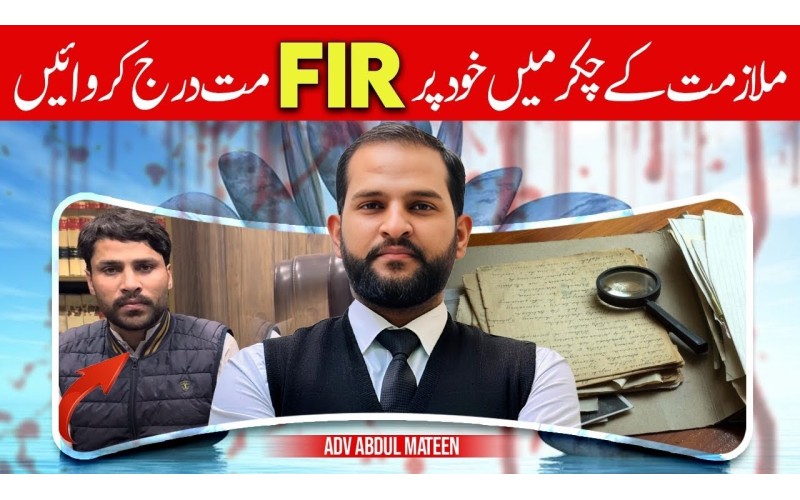
Today, I want to share the story of Abu Bakar, a powerful reminder for employees across Pakistan to understand their legal rights.
In 2021, an FIR was registered against Abu Bakar. When he approached us, we assured him that we would handle the trial within three to six months and work toward his acquittal. By the grace of Allah, not only was he acquitted within one month, but his entire criminal record was updated and cleared. All police records were corrected, restoring his legal standing and reputation.
But the real issue goes beyond one individual case.
What Actually Happened?
Abu Bakar was an employee at a restaurant called Thali Restaurant. During an inspection by the Punjab Food Authority, officials intended to register a case against the restaurant.
Instead of allowing the case to be registered in the name of the actual owner, the management allegedly provided Abu Bakar’s identity details. His CNIC was used without him fully understanding the consequences. As a result, the FIR was registered against the employee — not the owner.
This is not an isolated tactic. It is an old and troubling practice
A Common Pattern: Employees Used as Legal Shields
Across Pakistan, many employees face similar situations:
- Food Authority cases are registered in the employee’s name.
- Police register FIRs for regulatory violations (e.g., security guards not deployed, sound system violations) against employees instead of business owners.
- Workers are treated as expendable legal shields while real decision-makers avoid responsibility.
This practice damages innocent workers’ careers and reputations.
For three years, Abu Bakar suffered:
- Police stops at checkpoints.
- Difficulty securing employment.
- Social stigma attached to a criminal case.
A single wrongful FIR can disrupt a person’s life for years.
Another Serious Warning: Blank or Security Cheques
There is another dangerous practice employees must be aware of.
Many employers demand blank or security cheques as a “guarantee” at the time of hiring. Later, if the employee resigns or disputes unpaid salary, those cheques are dishonored, and criminal complaints are filed under cheque bounce laws.
Employees must understand:
Giving a signed cheque as a condition of employment can expose you to severe legal risk.
Key Legal Principle: Liability Lies With the Owner
If a violation occurs in a restaurant, shop, or commercial establishment:
- The legal responsibility primarily lies with the owner or person legally in charge.
- An employee performing assigned duties should not automatically become the accused.
- Liability must be determined based on control and authority, not convenience.
Being an employee does not mean sacrificing your legal identity or criminal record for someone else’s business.
Restoring Dignity and Record
Alhamdulillah, Abu Bakar’s acquittal cleared:
- His police records
- His character certificate record
- His employment barriers
He can now travel, seek employment, and live without the burden of a wrongful criminal case.
A Public Service Message for Workers
This blog serves as a public awareness message:
- Never allow your CNIC to be used casually by your employer.
- Do not sign blank documents or cheques without legal understanding.
- If an FIR is registered in your name unfairly, seek legal advice immediately.
- Understand that employment does not mean absorbing criminal liability for business decisions.
Employees are not disposable shields. They are individuals with rights, dignity, and legal protections.
Let this be a reminder: Know your rights. Protect your record. And never assume that loyalty to an employer requires sacrificing your future.
Allah Hafiz.