
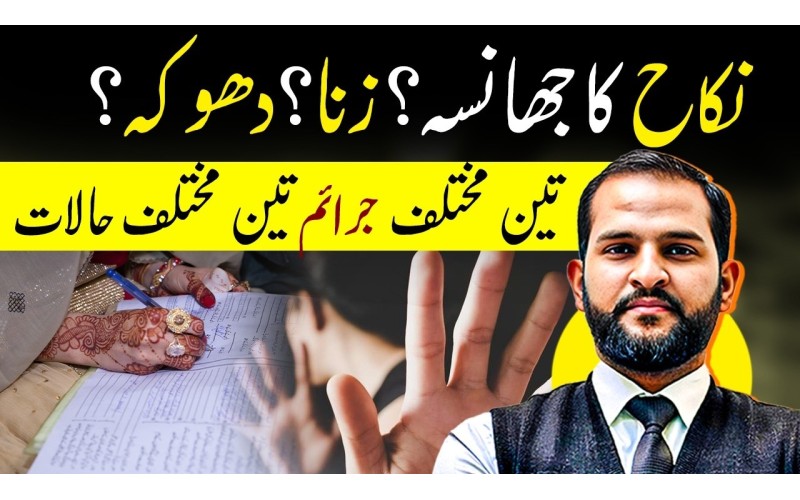
In many cases, people are confused about how the law categorizes sexual offences and what type of FIR (First Information Report) applies in different situations. This article explains three important legal categories under Pakistani law, particularly under the Pakistan Penal Code, to help you understand how these cases are treated and what consequences may follow.
1. Rape (Section 375 & 376 PPC)
Under Section 375, rape is defined as sexual intercourse without a woman’s consent. A case under Section 376 applies when the ingredients of rape are fulfilled.
A rape case is established when:
- There was no consent
- The act was done against the woman’s will
- She was intoxicated or drugged
- There was force, coercion, or threat of harm
- She was under the legal age of consent
If these elements are proven, the offence falls under Section 376, which carries severe punishment, including life imprisonment or the death penalty, depending on the circumstances.
This category is often referred to as forced sexual assault or rape, and it is treated as one of the most serious crimes under Pakistani law.
2. Deceitful Marriage Claim (Section 493 PPC)
There is an important legal distinction between:
- Simply promising marriage in the future, and
- Falsely making a woman believe she is already legally married.
Under Section 493 of the Pakistan Penal Code, if a man deceitfully makes a woman believe that she is lawfully married to him, and she cohabits or has sexual relations with him under that false belief, it is a criminal offence.
For example:
- The man tells the woman they are husband and wife.
- A false or informal ceremony is conducted without fulfilling legal marriage requirements.
- The woman genuinely believes she is legally married.
- The man never intended or completed a lawful marriage.
In such cases, the offence falls under Section 493. The punishment may include rigorous imprisonment, which involves imprisonment with hard labor.
This is different from rape because consent was given — but it was obtained through deception about a lawful marriage.
3. Consensual Sexual Relations (Section 496B PPC)
If two adults willingly engage in sexual relations and there is:
- Mutual consent
- No force or coercion
- No false belief of an existing marriage
- Only a promise of future marriage
Then the case may fall under Section 496B of the Pakistan Penal Code, which addresses consensual sexual relations outside marriage.
In such situations:
- Both parties are considered responsible.
- The punishment may include imprisonment (up to five years).
- This applies when both individuals were consenting adults.
This is legally distinct from rape and from deceitful marriage cases.
Key Differences at a Glance
| Situation | Applicable Section | Nature of Offence | Who is Punished? |
| No consent, force, intoxication, threats | 375 / 376 PPC | Rape | Accused only |
| Woman deceived into believing lawful marriage | 493 PPC | Deceitful cohabitation | Accused |
| Mutual consensual relationship without marriage | 496B PPC | Consensual fornication | Both parties |
Final Thoughts
Understanding the difference between rape, deceitful marriage claims, and consensual relationships is extremely important when filing an FIR. Each category has different legal consequences and punishments.
If you or someone you know is facing such a situation, it is strongly advised to consult a qualified criminal lawyer who can guide you based on the specific facts of the case.
Legal awareness empowers individuals to make informed decisions and protect their rights.