
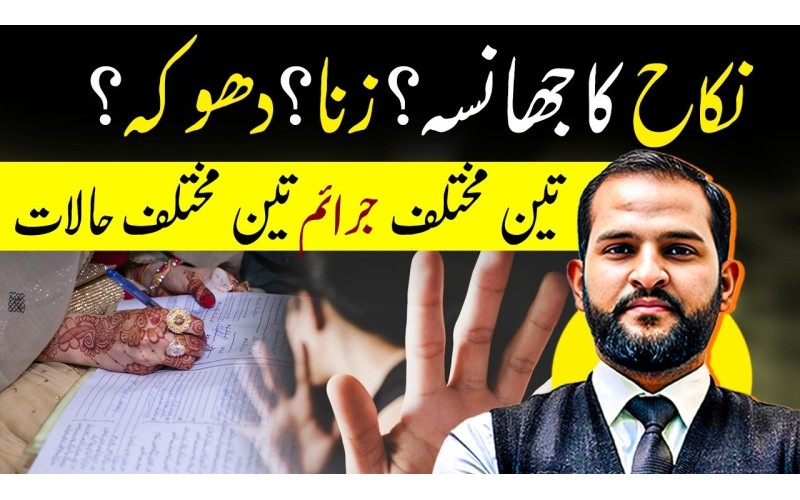
This article is intended to clarify important legal distinctions for women who may be considering filing an FIR (First Information Report) in cases involving sexual offenses. Under Pakistani law, different circumstances fall under different legal sections, and understanding these categories is essential for determining the strength and nature of a case.
Below is a simplified explanation of three major legal categories.
1. Rape (Without Consent) – Sections 375 & 376 PPC
Under the Pakistan Penal Code, Section 375 defines rape, and Section 376 prescribes its punishment.
A case falls under rape if:
- There was no consent
- The act was committed against the woman’s will
- Consent was obtained through intoxication
- There was force or coercion
- There was threat of harm or death
- The victim was under the legally protected age
If the ingredients of Section 375 are fulfilled, then Section 376 applies.
Punishment under Section 376:
- Death penalty, or
- Life imprisonment
This category applies strictly where consent was absent or invalid.
2. Intercourse Under False Promise of Marriage – Section 493 PPC
Section 493 addresses a different situation.
This applies when:
- A man falsely makes a woman believe she is legally married to him.
- He deceives her into thinking a valid marriage has taken place.
- There was no lawful marriage conducted under legal requirements.
- Because of that belief, sexual relations occurred.
For example:
If a man tells a woman, “You are now my wife,” and performs a fake ceremony without fulfilling legal marriage requirements, and the woman genuinely believes she is lawfully married, this falls under Section 493.
Punishment:
- Up to 25 years imprisonment (rigorous imprisonment)
This category focuses on deception about marriage, not consensual relations based on a future promise.
3. Consensual Relations with Promise of Future Marriage – Section 496 (or Related Provisions)
This is different from deception about an existing marriage.
If:
- Two adults willingly engage in consensual sexual relations,
- And one party promises future marriage,
- But no marriage takes place,
Then the case may fall under provisions dealing with consensual illicit relations (fornication), depending on circumstances and current legal interpretations.
In such situations:
- Both parties may be considered consenting.
- The punishment may extend up to 5 years imprisonment, depending on the applicable section and case facts.
The key difference here is mutual consent at the time of the act.
Key Differences Explained Simply
| Situation | Consent | Legal Section | Possible Punishment |
| Forced intercourse / intoxication / threat | No | 375 & 376 PPC | Death or Life |
| Deceived into believing lawful marriage | Yes, but based on fraud | 493 PPC | Up to 25 years |
| Mutual consent with promise of future marriage | Yes | 496 / related provisions | Up to 5 years (may apply to both) |
Important Legal Clarifications
- Rape (Zina-bil-Jabr) applies when there is no valid consent.
- Deception about existing marriage applies when a woman is misled into believing she is already legally married.
- Consensual relations with a future promise of marriage is treated differently and may involve consequences for both parties.
Every case depends heavily on facts, evidence, and judicial interpretation.
Final Note
Sexual offense laws are serious and complex. Anyone facing such a situation should:
- Seek immediate legal advice
- Preserve evidence
- File an FIR promptly if a crime has occurred
- Consult a qualified criminal lawyer for proper guidance
Understanding the correct legal category is crucial because it determines the strength of the case, the applicable punishment, and the legal strategy moving forward.