
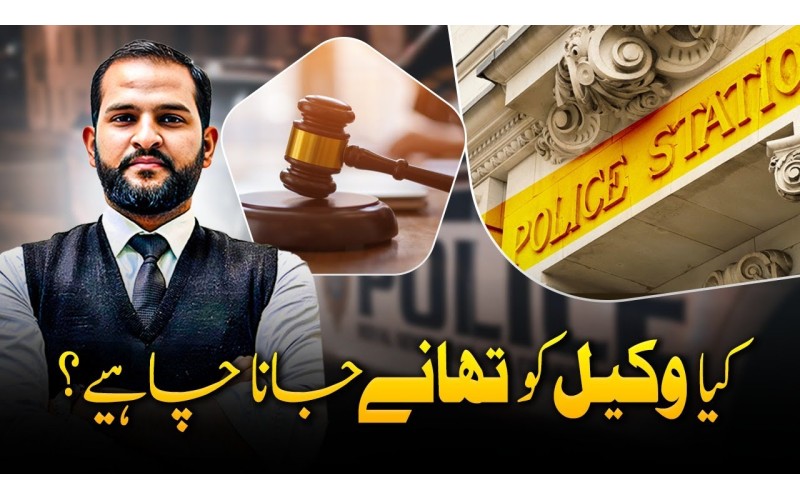
Should a Lawyer Visit the Police Station? A Question with Two Sides
“Should a lawyer go to the police station?”
At first glance, this may seem like a simple question. However, within Pakistan’s legal community, it carries two very different perspectives.
Many senior advocates and even some members of the judiciary disapprove of lawyers frequently visiting police stations. Their concern is rooted in professional dignity and reputation. When a lawyer is seen regularly sitting inside a police station, engaging in negotiations or informal dealings with police officers, it creates a negative perception. Such lawyers are often labeled as “touts”, individuals who attempt to close deals, influence investigations, or avoid proper courtroom advocacy.
This perception can damage a lawyer’s credibility. Clients may begin to doubt whether their counsel is truly independent or possibly compromised. The reputation of the lawyer, and even the dignity of the Bar, may be placed at stake. Bar Councils and senior members of the profession strongly discourage any conduct that resembles deal-making, influence-peddling, or client-hunting within police stations. Such actions clearly violate professional ethics and the Legal Practitioners and Bar Council Rules.
However, there is another, and far more important, side to this issue.
The Constitutional Right to Counsel
Under Article 10 and Article 10-A of the Constitution of the Islamic Republic of Pakistan (1973), every accused person is entitled to due process and a fair trial. A fundamental component of a fair trial is the right to consult and be defended by a lawyer of one’s choice.
When a person is arrested, the first 24 hours are critical. During this period, the accused may be questioned, pressured, or asked to make statements. If a lawyer does not visit the police station and consult with the client, how can the accused properly prepare a defense? How can the lawyer collect necessary information or evidence? How can the accused understand which questions must be answered and which rights may be lawfully exercised?
Access to counsel is not a luxury, it is a constitutional safeguard.
Legal Support for Lawyers Visiting Police Stations
The right of a lawyer to meet their client at a police station is not merely implied, it is clearly recognized in law.
Police Rules, Volume III, Chapter 26, Rule 26.28 specifically provides that when a lawyer visits a police station to meet their client, proper arrangements must be made to facilitate that meeting in an appropriate place.
This right is further supported by the Criminal Procedure Code (Cr.P.C.), which ensures access to legal representation, and by constitutional protections guaranteeing due process and fair trial.
Therefore, when a lawyer visits a police station for the purpose of protecting a client’s legal rights, ensuring lawful treatment, preventing illegal detention, or gathering essential information for defense, that lawyer is acting fully within the framework of the law.
The Difference Between Advocacy and Touting
The key distinction lies in intention and conduct.
A lawyer who:
-
Attempts to influence police through personal connections,
-
Engages in deal-making to unlawfully secure release,
-
Misuses legal knowledge to falsely implicate others,
-
Hunts for clients inside police stations,
is violating professional ethics and damaging the honor of the legal profession.
But a lawyer who:
-
Visits to prevent illegal detention,
-
Ensures constitutional rights are respected,
-
Advises the client about lawful questioning,
-
Collects information necessary for defense,
is performing a constitutional duty.
Conclusion
A lawyer’s visit to a police station should not be judged merely by presence, but by purpose.
When done for unethical influence or personal gain, it undermines the profession.
When done to safeguard fundamental rights, it strengthens justice.
Advocacy is not confined to courtrooms. Sometimes, the defense of liberty begins at the police station.