
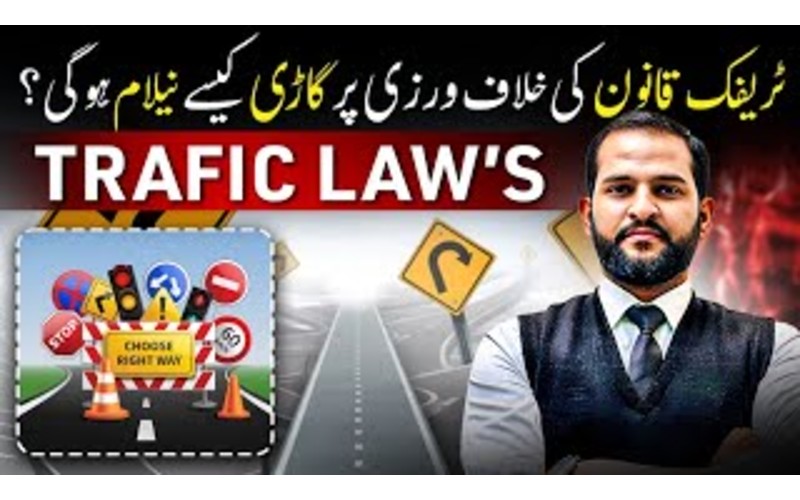
According to international reports, Pakistan witnesses nearly 41,000 traffic accidents every year, resulting in the loss of around 6,000 lives annually. A significant number of these fatalities occur due to negligent, rash, or reckless driving, and general disregard for traffic laws. In response to this alarming situation, the Government of Punjab has introduced important amendments to the Provincial Motor Vehicles Ordinance, 1965, which is already implemented across the province.
The amendment has been promulgated by the Governor of Punjab and aims to strengthen enforcement mechanisms, discourage traffic violations, and ultimately save human lives.
What Remains the Same
All traffic violations that were previously punishable remain offenses under the amended law. These include:
- Rash and negligent driving
- Driving without a valid license
- Violations of traffic signals and rules
- Other acts falling under traffic law contraventions
The e-challan system also continues, where fines are issued electronically.
What Is New in the Amendment
The key changes lie in penalties, timelines, and enforcement:
- Increased Fines
Traffic fines have been significantly enhanced. Instead of minor fines of Rs. 200 or Rs. 500, violations now attract fines ranging from Rs. 2,000 up to Rs. 20,000, depending on the nature of the offense. - 15-Day Challenge Period
Once an e-challan is issued, it will be sent to the offender via email or postal service. The individual has 15 days to challenge the challan in court. - Late Payment Penalty
If the challan is neither challenged nor paid within 15 days, a 10% additional fine will be imposed. - Vehicle Impoundment and Seizure
If the fine remains unpaid and the vehicle is later stopped, it may be impounded immediately along with the extra 10% penalty.
If the fine still remains unpaid, the vehicle can be seized, and an additional 10% fine will be added every 14 days. - Auction of Vehicle
Once the accumulated penalties equal the original fine amount (for example, a Rs. 2,000 fine becoming Rs. 4,000), the vehicle becomes liable for auction, following due legal process. - Liability of the Actual Driver
If the vehicle owner can prove that the vehicle was being driven by another person at the time of violation, the actual driver, not the owner, will be liable to pay the fine.
For this, the owner must appear before a traffic police officer of the prescribed rank and provide evidence and testimony.
Purpose of the Amendment
The amendment is not meant to punish citizens arbitrarily but to create accountability, improve road discipline, and protect human lives. Vehicles will not be auctioned immediately; a complete legal procedure is followed before taking such action.
Conclusion
Citizens are strongly advised to strictly follow traffic rules, drive responsibly, and avoid negligent behavior. By doing so, not only can we save our own money, but more importantly, we can save precious human lives.