In recent times, Pakistan’s foreign policy has received widespread appreciation across the world. If the international community is acknowledging these efforts, it would be unfair for the people of Pakistan not to recognize and appreciate this diplomatic success.
The situation began on 28 February 2026, when a major attack occurred inside Iran, resulting in the martyrdom of Iran’s Supreme Leader. Pakistan immediately issued a strong statement condemning the attack. At the same time, Pakistan described the situation as a conflict between Iran and Israel, criticized Israeli actions, and expressed solidarity with Iran.
However, when Iran launched counterattacks on Gulf countries, Pakistan maintained its balanced stance by condemning those actions as well, emphasizing that attacks on Gulf states were unacceptable. Iran, in response, justified its actions by claiming that the attacks against it were being facilitated through Gulf countries’ airspace and land routes, and therefore it would respond accordingly.
This situation created immense global pressure. Trade routes were disrupted, economic activity slowed down, and oil prices surged dramatically worldwide. Pakistan, too, faced a sharp increase in fuel prices. The crisis escalated to such an extent that fears of a global war began to emerge, with even the possibility of nuclear conflict being discussed.
At one point, the President of the United States issued a strong ultimatum, warning of severe consequences within ten days, which raised alarms globally. The international community largely opposed such rhetoric and called for restraint, fearing catastrophic consequences for humanity.
During this critical period, Pakistan’s diplomacy stood out. While major global powers were either preoccupied or unwilling to intervene effectively, Pakistan adopted a responsible and balanced approach.
China, for instance, appeared to be strategically observing the situation, as an escalation could have provided it an opportunity to assert control over Taiwan. Russia remained deeply engaged in its ongoing conflict with Ukraine. France faced diplomatic tensions, and the United Kingdom clearly stated it would not become part of the war. NATO countries also refrained from direct involvement.
Gulf countries, despite being affected parties, lacked the military and diplomatic leverage to control the situation. Meanwhile, India, despite having strong relations with multiple sides, faced complications after an Iranian warship was destroyed following its visit, leading to mistrust between India and Iran.
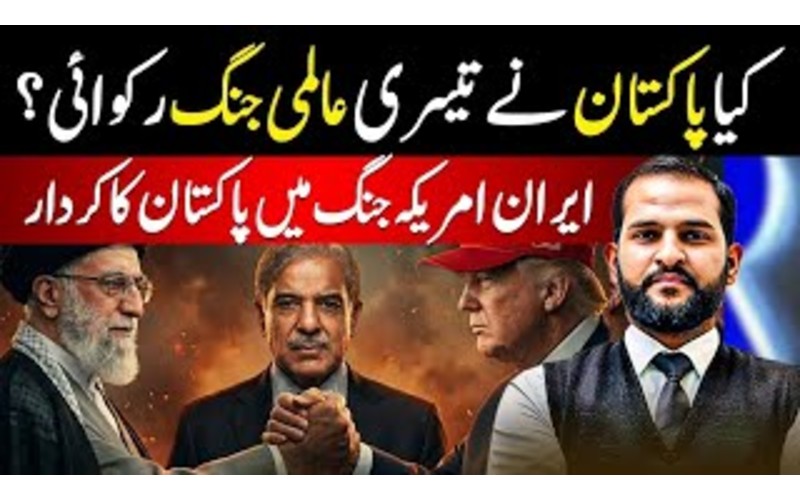
Amid all this, Pakistan emerged as a key state maintaining balanced relations with all sides. It preserved its ties with the United States, criticized Israeli actions, supported Iran diplomatically, and at the same time opposed escalation in the Gulf.
At a moment when the world feared nuclear confrontation, Pakistan played the role of a mediator and contributed significantly to de-escalation efforts. Islamabad became a center of diplomatic engagement, drawing international attention.
This episode reflects a major success of Pakistan’s foreign policy. By avoiding direct involvement in the conflict and instead promoting dialogue and restraint, Pakistan helped prevent a potentially devastating global war.
While some voices suggested that Pakistan should have directly joined the conflict in support of Iran, such a move could have further escalated tensions. Instead, Pakistan chose a path of diplomacy and balance, which proved far more effective.
Conclusion
Pakistan’s measured and strategic foreign policy during this crisis deserves recognition. It demonstrated maturity, responsibility, and a commitment to global peace.
The nation’s leadership and diplomatic institutions deserve appreciation for their role in managing a highly volatile situation and contributing to the prevention of a large-scale war.