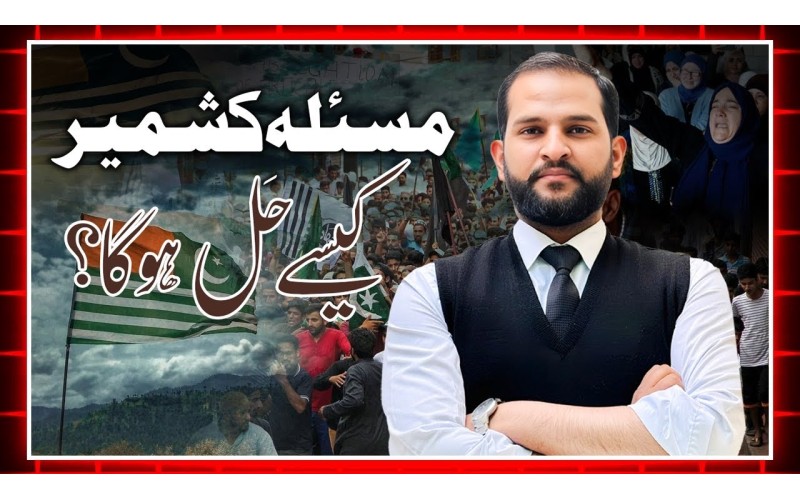
5,February 2026, is Kashmir Day. Across the country, there will be a public holiday. For the past 36 years, Pakistan has observed Kashmir Day in solidarity with the Kashmiri people. This annual observance formally began in 1990, although the roots of the Kashmir dispute trace back to 1947, when British India was divided into Pakistan and India.
At the time of partition, the princely state of Jammu and Kashmir became a contested territory. Since then, it has remained one of the most prolonged and sensitive disputes in South Asia. India claims Kashmir as its integral part. Pakistan claims it as a disputed territory whose future should be decided according to the will of its people. China also controls a portion of the region and consolidated its position by integrating the area it administers with its own territory.
While China resolved its territorial interests strategically and moved forward with economic development, Pakistan and India have remained locked in a political and military standoff for decades.
A Conflict That Benefits No One
For 79 years, the Kashmir issue between Pakistan and India has remained unresolved. For 36 years, Kashmir Day has been observed annually, yet the fundamental dispute persists.
The argument often raised is that if the dispute were genuinely resolved through dialogue, tensions would ease, defense expenditures could be reassessed, and the constant atmosphere of hostility might decline. Both countries allocate significant budgets in the name of defense, funded by their respective populations.
Meanwhile, ordinary citizens continue to bear the social and economic costs of prolonged conflict. Even on Kashmir Day, when courts and institutions close for the public holiday, the symbolism of solidarity contrasts with the lack of tangible political progress.
The Need for Serious Dialogue
This message is directed toward political leadership in both Pakistan and India:
The time has come for meaningful dialogue. A serious, structured, and sustained table talk process should begin, one that includes not only state actors but also acknowledges the voices and aspirations of the Kashmiri people themselves.
Military leadership in both countries also carries responsibility. The primary role of armed forces is national defense. If dialogue is not pursued, continued tension only prolongs uncertainty. However, war is not a solution, it brings devastation, economic collapse, and human suffering on both sides.
The only viable path forward is diplomatic engagement.
A Shared Responsibility
A lasting solution to the Kashmir dispute can only emerge when:
- Political leaders demonstrate courage and flexibility.
- Military leadership supports peaceful conflict resolution.
- The Kashmiri people are included in determining their future.
- Dialogue replaces hostility as the primary approach.
Resolving the Kashmir issue would not only benefit Pakistan and India but would also bring stability, economic growth, and peace to the entire region. Most importantly, it would serve the long-term interests of the people of Kashmir.
Moving Beyond Symbolism
Observing Kashmir Day each year reflects solidarity and national sentiment. However, symbolic gestures must eventually translate into policy action.
After nearly eight decades, the region deserves a serious and sustained effort toward resolution. Peace, stability, and development in South Asia depend on political maturity, strategic vision, and the willingness to engage in honest dialogue.
The future should be shaped not by perpetual conflict, but by responsible leadership and meaningful negotiation.