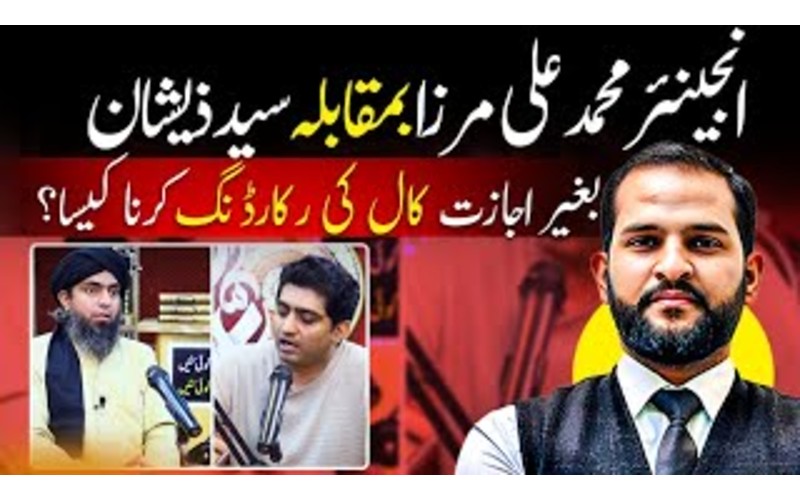
In recent days, a podcast controversy involving public figures has triggered a major debate in Pakistan: Is it legal to record someone’s phone call without telling them?
Many people believe that recording a call is always illegal. However, Pakistani law and Islamic principles tell a more detailed and balanced story.
Let’s understand it clearly.
What Sparked the Debate?
A journalist claimed that he recorded phone calls with a public figure’s manager to preserve proof of what was discussed before a podcast. When this was revealed, the other party objected and said that recording a call without permission violates privacy and Islamic values.
This raised an important public question:
“Does recording a call actually break the law?”
What Does Pakistani Law Say?
There is no law in Pakistan that directly makes call recording illegal when the person recording is part of the call.
The Prevention of Electronic Crimes Act (PECA) 2016 is often misunderstood. Section 24 deals with cyberstalking and publishing private material to harm someone’s reputation. It does not criminalize recording a call itself.
Section 19 of PECA talks about unauthorized interception, which means secretly listening to or recording someone else’s call when you are not part of it. That is illegal.
But if you are one of the people on the call, recording it for safety, evidence, or protection is not a crime.
When Is Call Recording Lawful?
Recording a call is legal when it is done for:
- Protecting yourself
- Keeping proof of an agreement
- Defending yourself from false accusations
- Documenting threats or fraud
- Journalism and evidence collection
In law, intention matters. If the recording is done for self-defence or truth, it is lawful.
Why Journalists Record Calls
Journalists face serious legal risks. If they publish something without proof, they can be sued for:
- Defamation
- Spreading false information
- Damaging reputation
That is why journalists often record calls. It protects them from being falsely accused of lying.
Without evidence, truth can easily be denied.
Is It a Violation of Privacy?
Privacy is important, but it does not protect:
- Lies
- Deception
- Threats
- Or criminal behavior
If someone is misleading, manipulating, or making harmful statements, recording the call becomes a way to protect justice and truth.
What Does Islam Say?
Islam teaches that actions are judged by intentions.
- If a call is recorded to:
- Expose wrongdoing
- Prevent harm
- Defend oneself
- Or reveal the truth
then it is morally allowed.
Islam does not support spying for harm, blackmail, or humiliation, but it does support protecting oneself from injustice.
Final Conclusion
Recording a phone call in Pakistan is not illegal if:
- You are part of the conversation
- Your intention is to protect yourself or preserve evidence
It becomes illegal only when:
- You secretly intercept others’ calls
- Or record with bad intentions
In today’s world of denial and misinformation, call recording has become a necessary tool for truth and accountability.