

In December 2025, a disturbing news story went viral on social media claiming that a woman in Faisalabad had cut off her husband’s tongue during a domestic dispute. The sensational nature of the claim quickly captured public attention, sparked outrage, and fueled exaggerated commentary. However, a closer look at the First Information Report (FIR) and the applicable provisions of the Pakistan Penal Code (PPC) reveals a very different legal reality.
What Actually Happened?
According to the FIR registered on 3 December 2025 at a police station in Faisalabad (Case No. 678/25), the incident involved a domestic dispute between a recently married couple. The complainant, acting on behalf of the injured husband, who was unable to speak properly, stated that the wife injured her husband’s tongue during a fight.
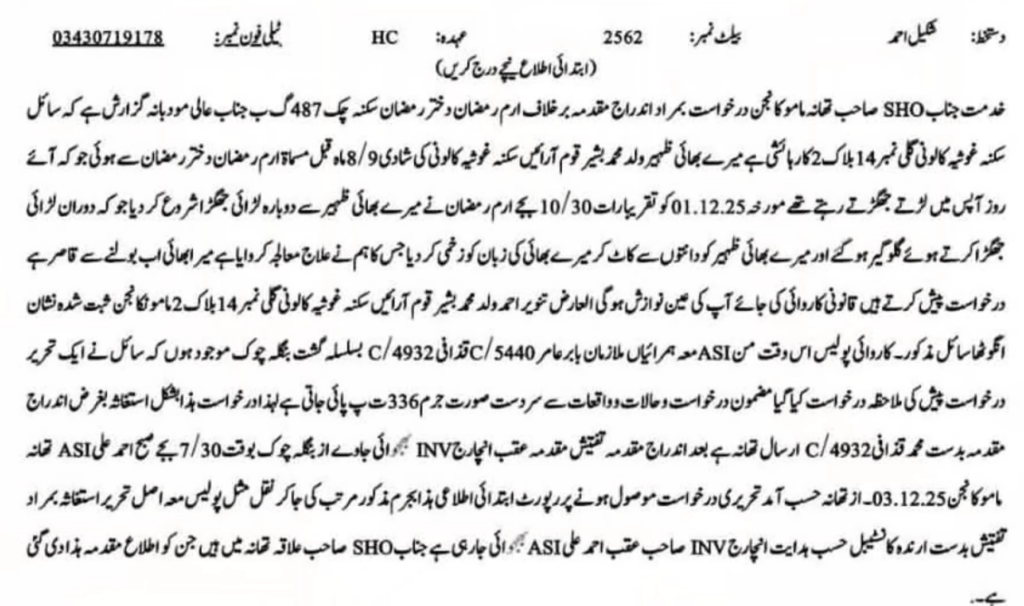
Crucially, the FIR does not state that the tongue was cut off or amputated. Instead, it clearly uses the term injury, which carries significant legal implications.
Why the Social Media Narrative Was Misleading
Social media headlines often prioritize shock value over accuracy. The phrase “tongue cut” is far more sensational than “tongue injured,” but legally, the difference is critical.
In practical terms, completely cutting off a tongue during a sudden domestic altercation is extremely unlikely. Medical and legal standards require clear evidence of amputation for such a claim to hold.
Legal Distinction Under Pakistan Penal Code
Understanding the difference between amputation and injury is essential:
1. If the Tongue Had Been Cut Off
- This would amount to Itlaf-e-Uzw (destruction of an organ).
- Relevant sections: PPC 333 and 334
- Punishment:
- Qisas (retaliation), if possible
- If Qisas is not feasible, then Arsh (financial compensation), calculated from the total Diyat amount
- If neither applies, Ta’zir (imprisonment) up to 10 years
- Qisas (retaliation), if possible
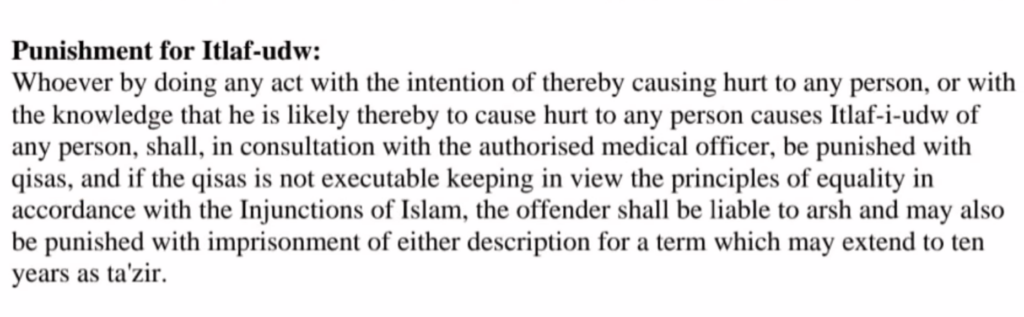
2. In the Present Case: Tongue Injured
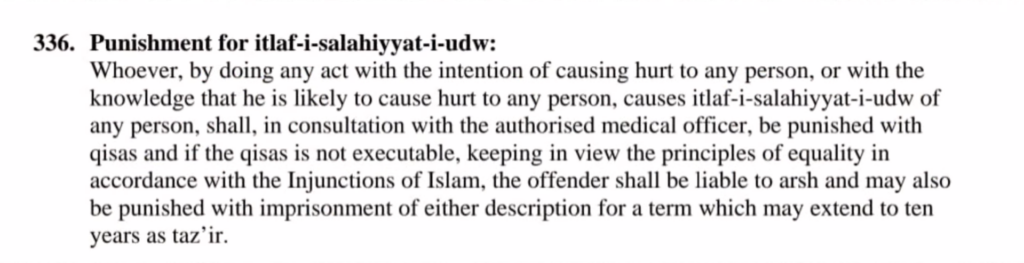
- This falls under Itlaf-e-Salahiyat-e-Uzw (impairment of the function of an organ).
- Relevant sections: PPC 335 and 336
- Punishment:
- If Qisas is not practically possible, Arsh is imposed proportionate to the loss of function
- For example:
- 50% loss of speech → 50% Arsh
- 25% loss → 25% Arsh
- 50% loss of speech → 50% Arsh
- Additionally, Ta’zir punishment of up to 10 years may still apply
- If Qisas is not practically possible, Arsh is imposed proportionate to the loss of function
Why Legal Accuracy Matters
Sensational and half-baked reporting can have dangerous consequences. When the public consumes exaggerated or incorrect legal narratives, it normalizes vigilantism and encourages individuals to take the law into their own hands.
This case is a reminder that law does not operate on emotions or viral headlines, but on facts, evidence, and precise legal definitions.
Conclusion
The Faisalabad incident was not a case of a tongue being cut off, but rather a case of tongue injury, as per the official record. The difference is not merely semantic, it determines the applicable law, the nature of punishment, and the course of justice.
Responsible journalism and informed legal discourse are essential to prevent misinformation and to ensure that justice is understood, not distorted.