

In a landmark step toward transparency and authenticity in the judicial system, the Lahore High Court (LHC) has introduced mandatory biometric verification for filing cases across the Lahore High Court and all district courts of Punjab. This new system has come into force from 20 January 2026.
This reform is being widely welcomed by the legal community as it directly addresses long-standing issues of impersonation, fraudulent litigation, and denial of filed pleadings.
Why Was Biometric Verification Introduced?
Previously, it was common for litigants to later deny filing a case or submitting a written statement. Many times, defendants would claim that they never authorized a return statement, or plaintiffs would deny initiating litigation altogether. This resulted in:
- Lengthy proceedings under Section 12(2) CPC
- Applications under Order XIII Rule 6
- Allegations of fake or unregistered lawyers
- Fraudulent decrees in property and family matters
Biometric verification ensures that the person filing the case is physically present and verified, making denial nearly impossible at a later stage.
Legal Impact of Biometric Verification
Once a person completes biometric verification, any subsequent denial of filing a case or statement would amount to false declaration, which may carry legal consequences. This system significantly strengthens the credibility of pleadings and court records.
First-Ever Case Filed with Biometric Verification
On 20 January 2026, Advocate Habib Ali Hassan, Associate of our legal team, successfully submitted the first ever case with biometric verification at the Lahore High Court. This milestone marks the practical implementation of this reform across Punjab.
Step-by-Step Procedure for Biometric Verification
The process is simple and user-friendly:
- Visit the official website of the Lahore High Court:
lhc.gov.pk

Lahore High Court Website
- Click on “Generate Biometric ID”

- Enter required case details, including:
- Court (Lahore High Court / District Court)
- Location (e.g., Principal Seat)
- CNIC number
- Mobile number
- Party name and father’s name
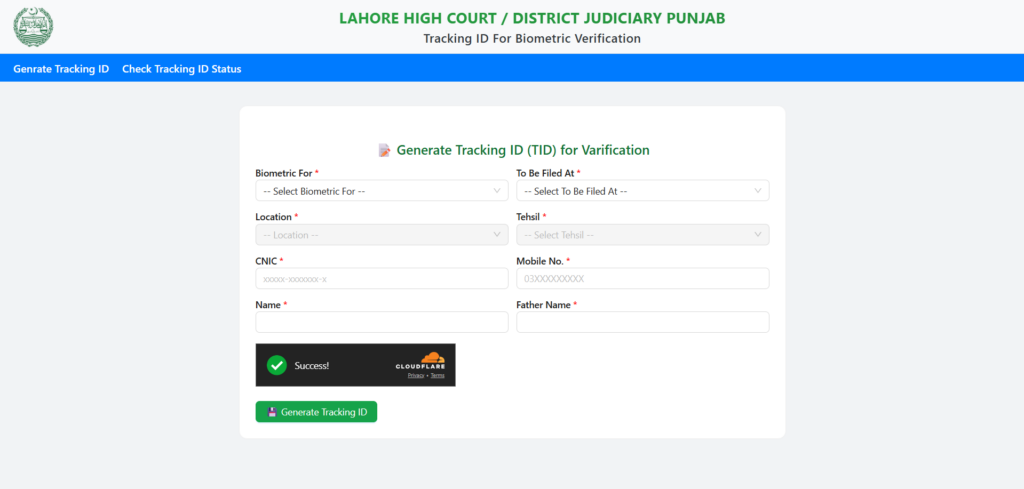
Information to be filled
- Generate the Tracking ID
- Download the generated PDF
- The Tracking ID remains valid for 48 hours
- Visit any NADRA Sahulat Center
- Provide the Tracking ID and complete biometric verification via thumb impression
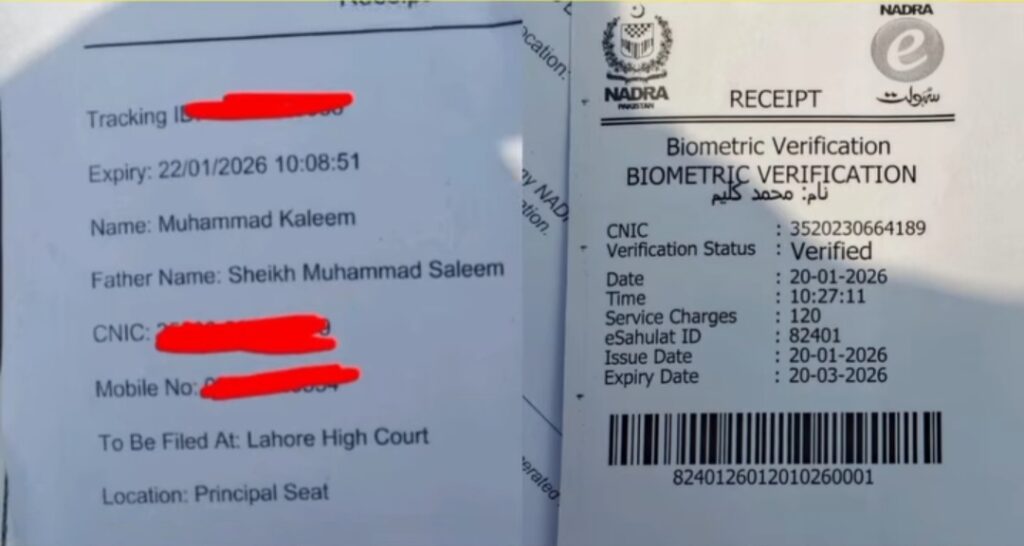
Receipt
Once verified, the case becomes eligible for filing in court.
Major Problems This Reform Will Resolve
This step will significantly reduce misuse of legal processes, particularly in:
- Khula and family cases filed without women’s consent
- Property disputes where parties were unaware of litigation
- Fake return statements submitted on behalf of defendants
- Use of unregistered or fake lawyers
Now, no case can be filed unless the concerned party’s biometric verification is completed.
A Major Step Toward Judicial Transparency
The introduction of biometric verification is a revolutionary step in Pakistan’s litigation system. It enhances trust, ensures accountability, and protects citizens from fraudulent legal actions.
This reform is expected to drastically reduce false litigation and restore public confidence in court proceedings, particularly at the district court level where misuse was most common.
Conclusion
Mandatory biometric verification marks a new era of judicial reform in Punjab. By ensuring that only verified individuals can initiate or respond to legal proceedings, the courts have taken a decisive step toward fairness, transparency, and justice.
The legal fraternity strongly appreciates this development and looks forward to its positive impact on the justice system.