
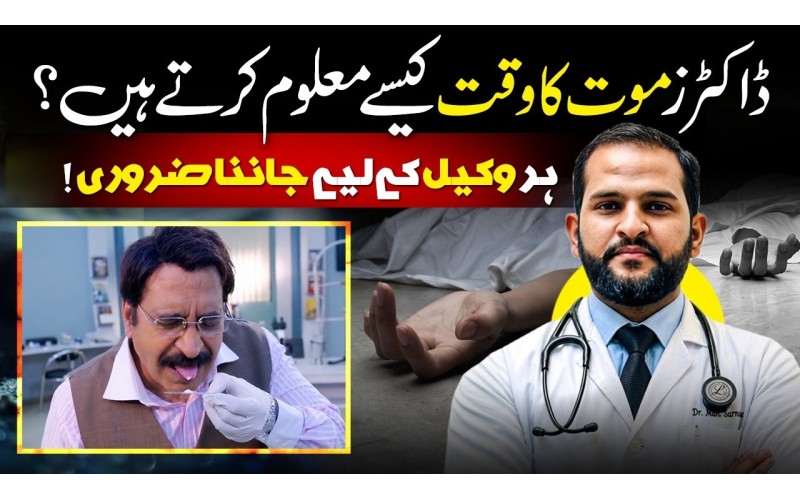
Have you ever watched a crime investigation show and wondered how forensic doctors can tell whether a person died 12 hours ago, three days ago, or even several weeks ago?
Determining the time of death is one of the most important aspects of forensic pathology. Medical experts rely on a series of predictable physical changes that occur in the human body after death. By examining these stages, they can estimate how long a person has been deceased.
Let’s explore the major stages of postmortem changes that help forensic experts determine the time of death.
1. Pallor Mortis – The Body Turns Pale
The first stage after death is known as Pallor Mortis.
During life, blood continuously circulates through the arteries, veins, and capillaries. When the heart stops beating, circulation ceases. As a result, the skin gradually loses its normal color and appears pale.
This process begins within minutes after death and is one of the earliest visible signs that life has ended.
2. Algor Mortis – The Body Cools Down
A living human body maintains an average temperature of approximately 37°C (98.6°F).
After death, the body can no longer regulate its temperature and begins to cool until it reaches the surrounding environmental temperature. This process is known as Algor Mortis.
Forensic experts use body temperature measurements to estimate the time since death, particularly during the first several hours after death.
3. Livor Mortis – Blood Settles Due to Gravity
Another important postmortem change is Livor Mortis, also called postmortem lividity.
Since the heart is no longer pumping blood, gravity causes blood to settle in the lower parts of the body. This creates areas of discoloration where blood accumulates, while other areas appear pale.
The pattern of lividity can help investigators determine:
- The approximate time of death.
- Whether the body was moved after death.
- The position of the body during the early postmortem period.
4. Rigor Mortis – Body Stiffening
One of the most well-known signs of death is Rigor Mortis.
After death, chemical changes in the muscles cause them to stiffen. The joints become difficult to move, and the body enters a rigid state.
Rigor Mortis generally develops within several hours after death and may remain present for up to 24 hours before gradually disappearing.
When a forensic examiner encounters a body with significant stiffness, it provides valuable information about the postmortem interval.
5. Secondary Flaccidity – The Body Relaxes Again
After Rigor Mortis passes, the muscles gradually lose their stiffness and return to a relaxed state. This stage is called Secondary Flaccidity.
During this phase:
- Muscle rigidity disappears.
- Joint stiffness subsides.
- The body becomes flexible once again.
This stage typically occurs after the period of rigor has ended and indicates that more than a day has passed since death.
6. Putrefaction – The Beginning of Decomposition
The next major stage is Putrefaction, the natural decomposition of the body.
Bacteria within the body begin breaking down tissues, producing gases and causing the body to swell. This process often results in:
- Bloating
- Skin discoloration
- Strong odors
- Tissue breakdown
Putrefaction marks the beginning of visible decomposition.
7. Active Decay – Rapid Tissue Breakdown
As decomposition progresses, the body enters the Active Decay stage.
During this phase:
- Large amounts of tissue are broken down.
- Strong odors are produced.
- Bodily fluids may be released.
- Insects and larvae become increasingly active.
This stage is often characterized by rapid deterioration of soft tissues.
8. Advanced Decay – Most Soft Tissue Is Lost
In the Advanced Decay stage, much of the body’s soft tissue has already decomposed.
Insects, larvae, and microorganisms continue consuming the remaining tissue. By this point, most muscles and internal organs have been significantly broken down.
The body becomes increasingly skeletal in appearance.
9. Skeletonization – Only Bones Remain
The final stage is Skeletonization.
At this point:
- Soft tissues have largely disappeared.
- Most organic material has decomposed.
- The skeletal structure remains.
The timing of skeletonization depends on environmental factors such as temperature, humidity, insect activity, and whether the body is buried, submerged, or exposed.
Why These Stages Matter
Forensic pathologists use all of these postmortem changes collectively to estimate the time of death. No single factor provides a precise answer, but when combined with environmental conditions and forensic evidence, these stages help investigators reconstruct the timeline of a person’s death.
Understanding these processes is essential for criminal investigations, court proceedings, and forensic science. They allow investigators to establish timelines, verify witness statements, and uncover the circumstances surrounding a death.
The science behind postmortem changes demonstrates how the human body continues to provide valuable clues even after life has ended, helping forensic experts uncover the truth.