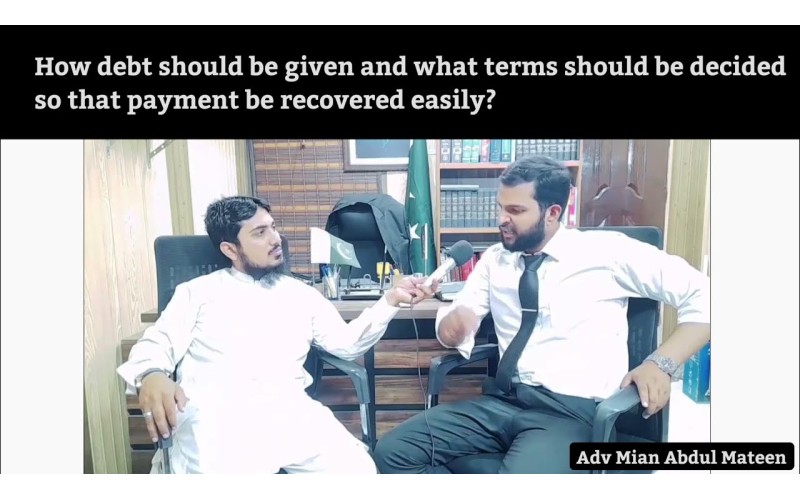
Lending money to someone may seem simple, but recovering that money later can become extremely difficult if proper precautions are not taken. Many people give loans to friends, relatives, or business partners without documentation, and when the time comes to recover the money, they are forced to request and explain their personal financial needs just to get their own money back.
To avoid such situations, it is very important to understand the legal precautions that should be taken while lending money.
The Common Problem With Informal Loans
In many communities, people lend money based purely on trust. They neither take a cheque, nor a promissory note, nor any written agreement. Later, when the borrower refuses to return the money, the lender has no strong legal proof to support their claim.
This is why legal documentation is essential whenever you give money as a loan.
The Best Practice: Use a Stamp Paper Agreement
One of the safest ways to lend money is by preparing a written agreement on stamp paper.
The process should include:
- The borrower issuing a stamp paper in their name
- A written declaration that they have received a specific amount as a loan
- A clear repayment date
- Presence of two independent witnesses
This written document can later be used as evidence if the borrower refuses to return the money.
Why a Cheque Is Even Better
While a stamp paper agreement is useful, modern legal practice recommends an additional step: taking a cheque from the borrower.
With the banking system now widely used, cheques provide stronger legal protection. If the borrower issues a cheque and it is dishonoured (bounced), the law provides a direct legal remedy.
Under Section 489-F of the Pakistan Penal Code (PPC), issuing a cheque that is dishonoured due to insufficient funds can lead to criminal proceedings and possible imprisonment of up to three years.
Civil Recovery vs Cheque-Based Legal Action
If you only have a stamp paper agreement, you may have to file a civil recovery suit in court. Civil cases can sometimes take one to three years to conclude if the matter becomes contested.
However, when a cheque is involved, the matter becomes much stronger legally. In such cases:
- A summary suit under Order 37 can be filed in court.
- The case is handled through summary proceedings.
- The decision may come within six months or even earlier.
This makes the recovery process much faster and more effective.
What If Someone Refuses to Open a Bank Account?
Sometimes borrowers claim they do not have a bank account and cannot issue a cheque. In such situations, another legal option is to obtain a promissory note.
A promissory note is a written promise by the borrower to repay a specific amount of money. It works similarly to a cheque in legal proceedings.
Under recent rules, a promissory note must carry a stamp duty of at least PKR 500, and the borrower should place their signature or thumb impression on the document.
Such a document can also be used to file a summary recovery suit in court.
Criminal Action for Breach of Trust
In some situations, the loan may be documented as money given as trust (Amanat). If the borrower fails to return the money in such cases, it may constitute criminal breach of trust.
Under Section 406 of the Pakistan Penal Code (PPC), breach of trust is a criminal offence. You can submit an application to the police for registration of a case.
If the police refuse to take action, you can approach the court by filing a petition under Section 22-A/22-B of the Criminal Procedure Code (CrPC) to request the registration of an FIR.
Final Advice
Whenever you lend money, never rely solely on trust. Proper documentation can protect you from future disputes and financial loss.
Before giving a loan, try to ensure:
- A written agreement on stamp paper
- A cheque from the borrower
- A promissory note if a cheque is not possible
- Presence of independent witnesses
Taking these precautions can save you from long legal battles and help ensure that your money can be recovered through lawful means.
If you have any legal questions regarding loan recovery, cheque bounce cases, or promissory notes, feel free to ask in the comments section, and we will guide you accordingly.