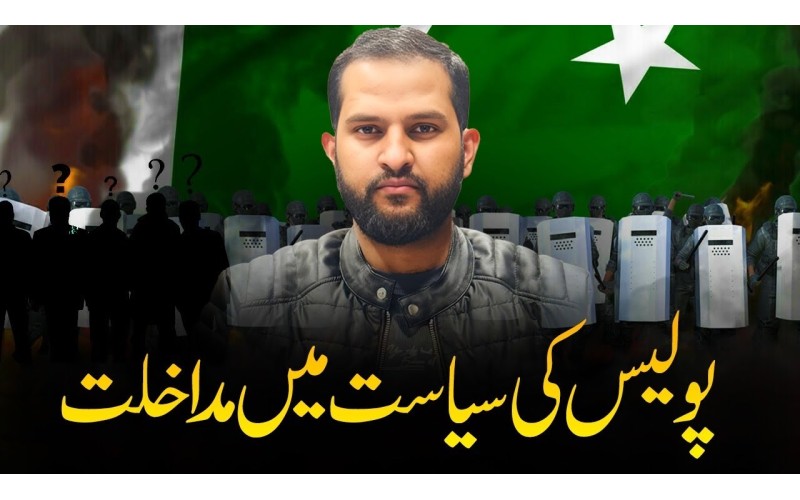
I watched an interview of the Inspector General (IG) of Islamabad. Frankly, it was difficult to understand what he was trying to say. His speech seemed hesitant and unclear, and the message lacked confidence and direction. Yet at the same time, we often hear promises about empowering youth and bringing change.
As I continued scrolling through videos, I came across a statement by the DPO of Attock. He claimed that wherever he sets up a checkpoint, even a gathering worth one lakh rupees cannot take place without his notice. Such statements raise serious concerns. Public officials must choose their words carefully, especially when addressing citizens’ rights.
Further in the videos, I saw several Islamabad police officers chanting slogans. Some appeared physically unfit, struggling even to move properly, yet raising loud chants of “Ya Ali” and “Nara-e-Haideri.” What struck me most was the contradiction. The historical legacy of Imam Ali, Imam Hasan, and Imam Hussain is one of sacrifice, justice, and standing firmly against oppression and tyranny. Chanting their names carries a deep moral responsibility.
It is troubling when powerful slogans are used without understanding the values they represent, justice, courage, and resistance against injustice. One must reflect whether actions align with those principles.
This brings us to a serious concern: the silence of the courts. It is a moment of reflection when law enforcement officials make aggressive or questionable public statements, and yet there is little visible judicial response. Protest is a fundamental right. Peaceful protest should not be discouraged or harassed.
If protest is a constitutional right, then on what basis are citizens being intimidated?
Leadership begins with accountability. Before making bold statements, law enforcement leadership should first ensure:
- Professional conduct in public communication.
- Physical and operational fitness of officers.
- Effective control of crime.
- Protection of citizens’ constitutional rights.
The primary responsibility of the police is to control crime and maintain law and order, not to create fear or suppress lawful expression.
This is a moment of reflection for institutions. Authority must always be balanced with responsibility, and power must never be used to promote oppression or unjust tactics.
May we all be guided toward justice, fairness, and accountability.