
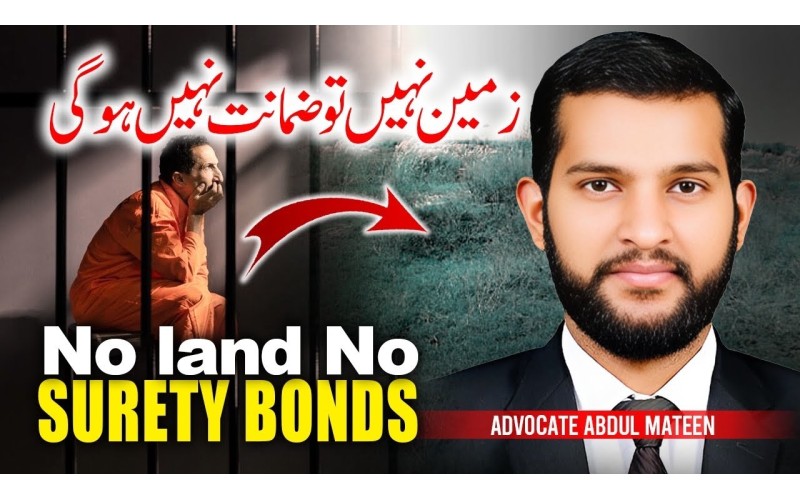
Imagine the mental agony of a person whose bail has been approved by the court, yet he remains in jail.
When a court grants bail, it usually orders the accused to furnish surety bonds worth Rs. 50,000 or Rs. 100,000. This does not mean that the person must deposit that amount in cash with the court. It simply means that a friend, father, or relative who owns property worth that amount (or more) can stand as surety. For example, if someone owns a motorcycle or a car valued above one lakh rupees, they can submit the vehicle’s documents in court as security. Once the surety is accepted, the release order is issued and the prisoner is freed.
But in practice, things are not so simple.
In some courts, as I personally observed in Ferozwala, bail may be granted, yet court staff refuse to accept a motorcycle as surety for a bond of one lakh rupees. In such cases, the accused may spend at least one extra night in jail. And this is not an isolated case. Many individuals remain behind bars because they cannot arrange acceptable sureties in time.
Although the law allows different forms of surety, some magistrates insist on registered land documents (“registry”) only. Here lies the core problem.
Pakistan is a poor country. Most criminal cases are registered against poor people, individuals who do not own land. If a person has no registered property, how can he produce land documents? Even his friends or relatives may not have land to offer as surety. As a result, despite being granted bail, he remains imprisoned.
The situation becomes even more complicated when courts require property from the same district where the case is registered. For example, if a person from Gujranwala is booked in Sheikhupura, he must produce a surety who owns property in Sheikhupura specifically. This creates an almost impossible burden for many families.
And when legal pathways become blocked, corruption finds its way in.
Inside many courts, “tout” agents operate openly. They arrange fake surety bonds and forged property documents when legitimate sureties are rejected. These illegal middlemen charge anywhere between Rs. 10,000 to Rs. 15,000. This practice exists largely because genuine alternatives, such as accepting vehicle documents, are being unreasonably refused.
This is not just a procedural issue; it is a human rights issue.
A judge may grant bail in good faith, but if the court administration refuses reasonable sureties, the release order cannot be executed. The result? An innocent or undertrial person spends additional days, sometimes weeks, in jail unnecessarily. Across the country, there are prisoners who remain incarcerated simply because they cannot arrange acceptable sureties.
The solution is simple.
If a court orders a surety bond of Rs. 50,000 or Rs. 100,000, then vehicle documents — motorcycles or cars with equivalent value — should be accepted after proper verification. Judges must ensure that their bail orders are practically enforceable. Otherwise, a bail order becomes meaningless on paper while a person continues to suffer behind bars.
I respectfully urge all Sessions Judges across Pakistan to take notice of this issue. A uniform circular should be issued directing subordinate courts to accept reasonable forms of surety within the ordered amount. This would reduce corruption, eliminate the role of illegal touts, and, most importantly, protect the fundamental right to liberty.
No person should remain in jail after being granted bail simply because of technical or administrative hurdles.
Justice delayed in release is justice denied.