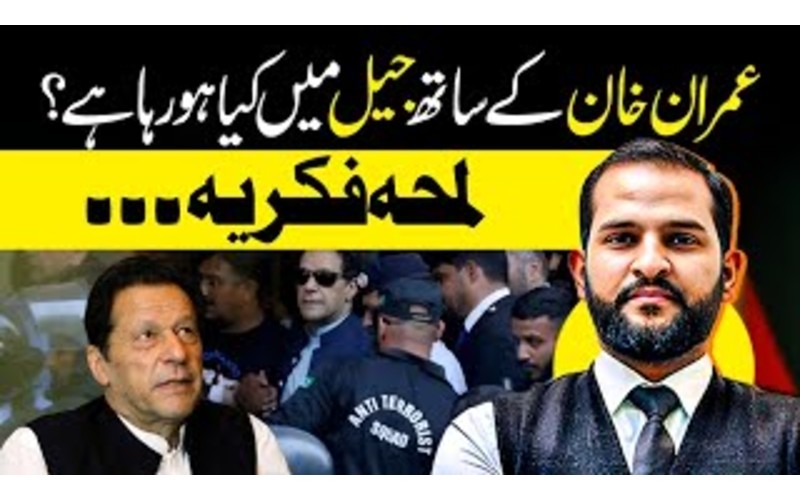
Recent reports regarding the health of former Prime Minister Imran Khan have caused deep concern among his supporters and many citizens across Pakistan. News suggesting deteriorating health conditions while in prison has sparked emotional reactions and renewed debate about the treatment of political leaders in the country.
Imran Khan, who served as Prime Minister of Pakistan for over three years, is now facing imprisonment under various legal cases. Reports indicate that he has allegedly experienced serious health challenges during his time in custody. Concerns include inadequate prison conditions, extreme heat, lack of proper medical facilities, and complications such as an eye infection that reportedly reduced his visibility significantly.
At 74 years of age, questions are being raised about whether sufficient medical care and basic facilities are being provided. Supporters argue that regardless of political affiliation, a former head of government deserves humane treatment, proper medical attention, and dignity under the law.
A Cycle of Political Accountability
The situation has also revived memories of legal proceedings against another former Prime Minister, Nawaz Sharif. During his tenure and afterward, he faced cases filed by the National Accountability Bureau (NAB), resulting in convictions and imprisonment. At the time, many described his prosecution as politically motivated, while others defended it as accountability under the law.
Observers note that the same judicial system that once prosecuted Nawaz Sharif has also delivered judgments in cases involving Imran Khan. This has led to a broader reflection on how political fortunes change over time. Today’s powerful leader can become tomorrow’s defendant.
History often reminds us that political authority is temporary. Leadership, influence, and power can shift dramatically with time. The wheel of politics continues to turn.
A Larger Question About Political Stability
Beyond individual cases, this situation raises deeper concerns:
- How long will political leaders continue to face arrest and imprisonment?
- Is the cycle of prosecution contributing to political instability?
- What impact does this have on public trust in democratic institutions?
Many argue that constant political confrontation discourages capable and ethical individuals from entering politics. If respected and competent people hesitate to participate in governance due to fear of legal retaliation or political targeting, national progress may suffer.
For a country to move forward on the path of development, political maturity, institutional strength, and consistent rule of law are essential.
A Call for Humanity and Reform
Regardless of political differences, there is a strong humanitarian argument that all detainees, especially elderly individuals, should receive proper medical care and dignified treatment.
Political competition should not undermine basic human rights.
The broader hope among citizens is for a future where:
- Accountability is fair and transparent
- Political differences are resolved through democratic processes
- Institutions operate independently
- And leadership transitions do not result in cycles of revenge
Ultimately, the well-being of the nation depends on stability, justice, and unity.
Many continue to pray for Imran Khan’s health and recovery, while also hoping for a political environment in Pakistan where justice, compassion, and democracy prevail.