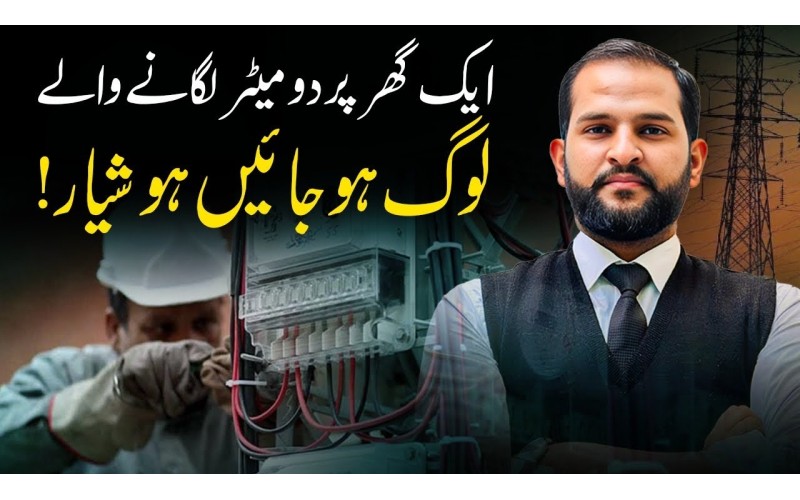
People installing multiple electricity meters on a single building should be cautious. New guidelines issued by NEPRA have instructed all DISCOs (electricity distribution companies) to strictly regulate the installation of more than one meter on a single residential building.
Why This Policy Was Introduced
The issue arises from the protected and unprotected consumer categories:
-
A household consuming up to 200 units per month falls under the protected category and enjoys lower tariffs and subsidies.
-
If consumption exceeds 200 units, the household is placed in the unprotected category for the next six months, resulting in significantly higher electricity charges.
To avoid higher tariffs, many consumers began installing multiple meters (2, 3, or even more) in one house. Large appliances were shifted between meters so that each meter remained within the protected category, unfairly benefiting from subsidies meant for low‑consumption households.
How This Affected the System
This practice:
-
Misused government subsidies
-
Shifted financial burden onto honest consumers
-
Undermined the purpose of energy pricing reforms
Subsidies meant for low‑usage families were effectively being exploited by high‑consumption households.
What the New Rules Say
-
One family = one meter
-
If a single family is found using more than one meter, extra meters will be removed.
-
Penalties and fines may also be imposed.
-
-
Exception: Multiple families in one building
-
If more than one family genuinely resides in the same building, additional meters may be allowed only if:
-
Each family has a separate portion
-
Separate kitchen, bathroom, bedroom
-
Separate electric circuits
-
Separate billing responsibility
-
-
Families must submit a sworn affidavit confirming independent residence.
-
If proven, 2, 3, or more meters may be permitted depending on the number of families.
Risk of Corruption
Unfortunately, this policy also opens doors to potential corruption:
-
False affidavits
-
Bribes to meter readers or officials
-
Illegal installations under fake family claims
Families previously misusing the system may attempt to continue by fabricating documents.
What the Government Must Ensure
If this policy is to succeed:
-
Strict verification mechanisms must be implemented
-
Internal corruption within DISCOs must be controlled
-
Transparency and accountability must be enforced
Without this, the policy may harm honest consumers while benefiting the same offenders through different means.
Conclusion
Electricity subsidies are meant to protect low‑consumption households, not to be exploited.
Installing multiple meters for a single family is now a legal and financial risk.
Public awareness, strict enforcement, and corruption control are essential to make this reform effective.