For years, we have seen a disturbing practice in Pakistan.
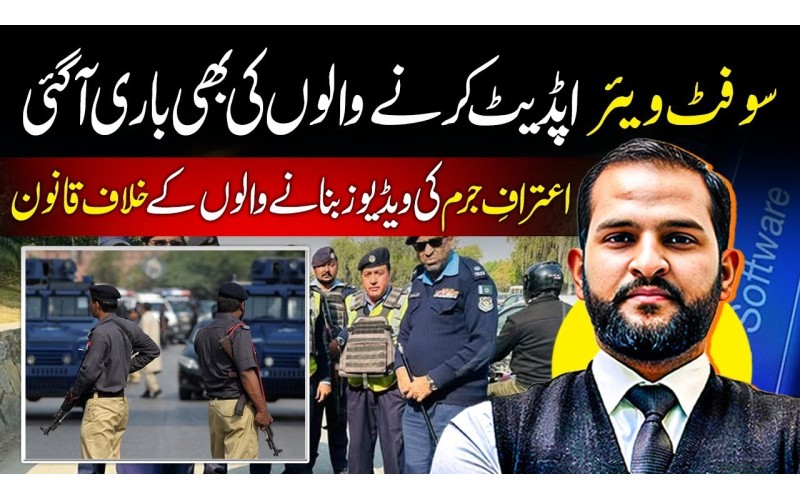
Whenever FIA, NCCIA, or police arrested someone, videos were often recorded and uploaded online under labels like “software update” or “operation success.”
Similarly, police at checkpoints would stop citizens, call media teams, and conduct on-the-spot interviews about:
-
Number plate issues
-
Token tax
-
Excise problems
-
Minor traffic violations
These acts publicly humiliated people and damaged their dignity — even before any court decided guilt.
This was nothing less than trial by media.
Constitutional Rights Were Being Violated
While media has rights under the Constitution of Pakistan 1973 — including:
-
Freedom of speech
-
Right to information
-
Right to reporting
these rights are not unlimited.
They are subject to important constitutional protections, including:
Article 14 – Right to Dignity
Every person has the right to dignity and privacy.
Article 13 – Protection Against Self-Incrimination
No one can be forced to confess or make statements against themselves.
Article 10-A – Right to Fair Trial
Every accused person has the right to a fair and impartial trial.
When law enforcement records interviews or confessions in custody and uploads them publicly, all three rights are violated.
Such actions permanently stigmatize a person — even if they are later proven innocent.
Public Interest Litigation Filed
Because of this growing abuse, a Public Interest Litigation (PIL) was filed by Advocate Mian Ali Haider, with her associate Vishal Shakir as petitioner, against the Federation of Pakistan.
Senior officers of law enforcement agencies were summoned and informed that:
-
Media access cannot override human dignity
-
Custodial confessions are illegal
-
Public interviews destroy fair trial rights
Landmark Judgment by Justice Ali Zia Bajwa (September 2025)
In September 2025, Honorable Justice Ali Zia Bajwa issued a clear judgment directing:
No law enforcement agency may record or upload interviews of any person in custody.
No arrest videos may be shared with media or social platforms.
The Court declared such practices unconstitutional because they violate:
-
Right to fair trial
-
Protection against self-incrimination
-
Right to dignity
This judgment applies to all law enforcement agencies, including police, FIA, and NCCIA.
What If This Still Happens to You?
If any officer:
-
Records your video after arrest
-
Forces an interview
-
Uploads footage online
-
Uses media at checkpoints to humiliate you
you now have strong legal remedies.
You may file:
Contempt Petition
(Up to 6 months punishment for violators)
Departmental Proceedings
Against involved officers
Application to Grievance Redressal Commissioner
Petition under Section 22-B (Protection)
Petition under Section 22-A (Directions)
Private Criminal Complaint
You can rely on Writ Petition No. 8075 of 2023, which established this law.
Final Message to Law Enforcement Agencies
Respect constitutional boundaries.
Never compromise:
-
Fair trial rights
-
Human dignity
-
Protection against forced confession
Otherwise, this High Court judgment will stand against you.
Final Thoughts
Justice is decided in courts — not on social media.
Arrests are not convictions.
Every citizen deserves dignity, due process, and a fair trial.
If you or someone you know faces this injustice, act legally and immediately.
Stay informed.
Stay protected.