
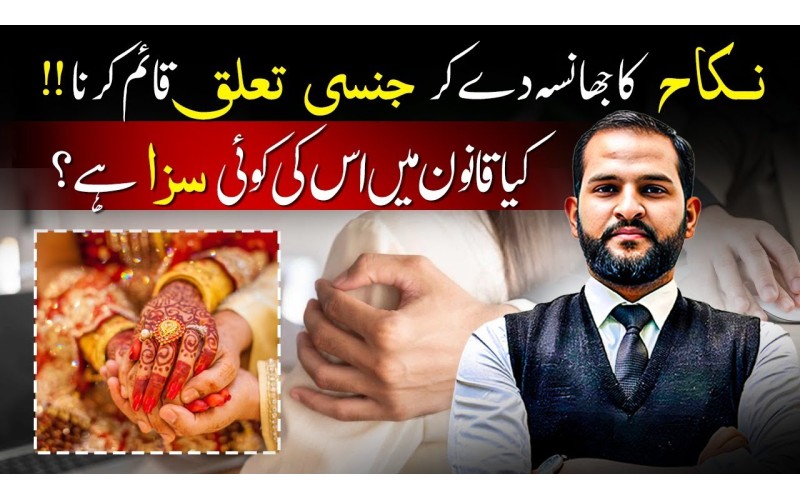
In Pakistan, a common legal question arises when a man and woman engage in a sexual relationship based on a promise of marriage that is later broken: does this fall under rape (Zina-bil-Jabr), or is it treated differently under the law?
This issue was clearly addressed by Justice Tariq Nadeem in PLJ 2024 (409), where the court examined whether consensual intimacy established on the assurance of Nikah can legally be categorized as rape.
Let’s break it down in simple terms.
Understanding Rape (Zina-bil-Jabr) Under Pakistani Law
Justice Tariq Nadeem emphasized that courts must strictly follow the statutory definitions provided in the Pakistan Penal Code (PPC). According to the law, sexual intercourse becomes Zina-bil-Jabr (rape) only if it falls under any of the following seven conditions:
1. Against the woman’s will
If the act occurs forcibly, without her will, it is rape.
2. Without consent
Any sexual act performed without explicit consent is considered rape.
3. Consent obtained through fear or coercion
If consent is extracted by threatening death, injury, or serious harm, it is legally invalid.
4. Consent based on false belief of lawful marriage
If a woman consents believing the man is her lawful husband (when he is not), the act qualifies as rape.
5. Consent given while mentally impaired or intoxicated
If the woman is mentally unsound, intoxicated, drugged, or otherwise unable to understand the nature and consequences of the act, it amounts to rape.
6. If the woman is under 16 years of age
Even with apparent consent, intercourse with a girl under 16 constitutes rape. (In Punjab and Islamabad, child marriage laws further raise this threshold.)
7. When the woman is incapable of giving consent
Any situation where consent cannot legally or practically be given also falls under rape.
What About Sex on the Promise of Marriage?
Here lies the crucial clarification from PLJ 2024 (409):
When both parties willingly engage in a sexual relationship, believing they will marry later, but the marriage does not take place, this does NOT fall under the definition of rape (Zina-bil-Jabr).
Instead, such conduct may fall under fornication (consensual illicit intercourse).
Legal Consequences of Fornication
Fornication is treated differently from rape:
- It is a non-cognizable offense
- Police cannot register an FIR without court permission
- It proceeds through a private complaint
- Punishment may extend up to five years imprisonment, along with possible fine
- Both man and woman can be held liable
The exact sentence depends on judicial discretion.
Key Takeaway
Pakistani law draws a clear distinction between forced or deceitful intercourse and consensual relations based on a promise of marriage.
While breaking a promise of Nikah may carry moral and civil implications, it does not automatically constitute rape under criminal law unless one of the seven statutory conditions is fulfilled.
Understanding this legal boundary is essential to prevent misuse of serious criminal provisions and to ensure justice is applied correctly.