

Five months have passed since a devastating fire broke out inside the LDA Building. Yet, to this day, no clear answers have been provided. How did the fire start? Who was responsible? And why has accountability remained absent?
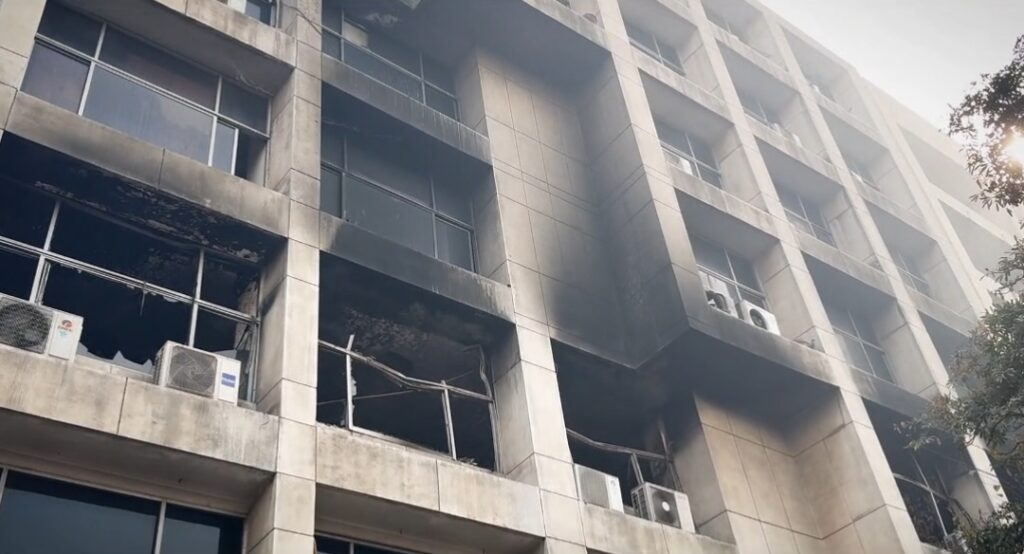
current condition
This was not a private property, it was a government building. In most cases, when a public building is damaged, renovation work begins within days. However, in this instance, months have gone by without meaningful progress. Judges, court staff, and litigants continue to suffer as court proceedings are conducted under extremely difficult conditions.
A System Forced to Operate in Crisis
Civil judges and session judges are still functioning from cramped and inadequate rooms. These spaces are not designed to store legal files securely, nor are they suitable for the smooth functioning of courts. The result is disorder, delays, and frustration for everyone involved.
The fire did not only damage infrastructure, it destroyed something far more valuable: justice records.
Thousands of case files were reduced to ashes. These were not ordinary papers; they were the result of years of legal struggle, documentation, and hearings. For many litigants, their entire case history vanished overnight. Even today, numerous files that were submitted and pursued before the incident have not reappeared in the judicial process.
The Urgent Need for Digital Judicial Records
This tragedy has exposed a long standing weakness in our judicial system: the absence of a comprehensive digital record system.
Judicial records should not exist solely on paper. A centralized online database is no longer a luxury, it is a necessity. Digital case management would protect records from physical damage, reduce delays, and ensure transparency and accountability within the justice system.
Had proper digitization been in place, the loss caused by this fire would not have paralyzed court proceedings to this extent.
Accountability and Immediate Action Required
Five months is not a short period. The public deserves to know:
- Who was responsible for the fire?
- Why has the building not been renovated?
- What interim arrangements are being made to ensure dignified court operations?
- What steps are being taken to protect judicial records in the future?
If renovation is not possible, then an alternative solution must be implemented immediately. Judges cannot be expected to administer justice from unsuitable and unsafe environments.
Justice Cannot Survive Neglect
Judicial administration is the backbone of any functioning society. When courts are damaged and no one is held accountable, public trust in the justice system erodes. Justice delayed is justice denied but justice destroyed is a far greater injustice.
This issue demands the urgent attention of the higher judiciary and the Government of Punjab. It is time to focus not only on court decisions, but also on the infrastructure and systems that make justice possible.
A single inspection, a single decisive action, can begin to fix a structure that is currently failing both the courts and the people they serve.